From foundations to clinical application.
Explore the eight-phase model and the five-day learning arc. See how theory, preparation, processing, supervised practice and consultation connect.
What You’ll Learn
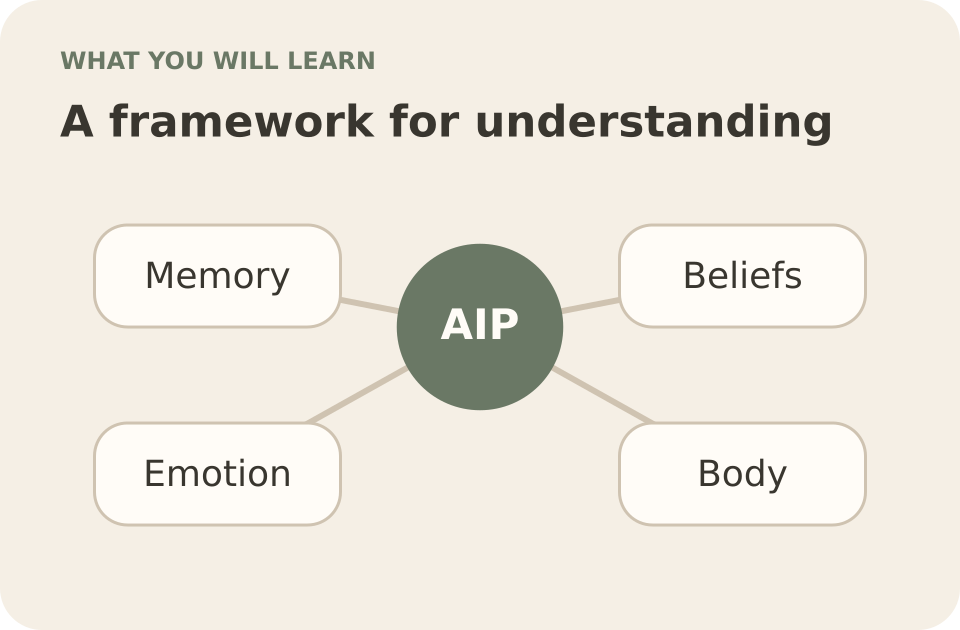
Foundations and the Adaptive Information Processing model
This course uses EMDR Consulting’s curriculum, developed by Roy Kiessling and taught by Kyle Poon, an EMDRIA-Approved Trainer and Consultant. You will examine the development of EMDR therapy, the Adaptive Information Processing model, the evidence base, and leading hypotheses about bilateral or dual-attention stimulation, working memory, and other processing mechanisms.

Case formulation and preparation
You will practise gathering relevant history, assessing readiness, identifying client resources, explaining EMDR, obtaining informed consent, and developing a target sequence plan that connects past experiences, present triggers, and future needs.

The eight phases of EMDR therapy
The course teaches the full eight-phase model: history taking, preparation, assessment, desensitization, installation, body scan, closure, and reevaluation. The focus is both procedural and conceptual—what to do, why it matters, and what clinical information guides the next decision.

Processing and clinical interventions
You will practise standard EMDR processing and learn how more contained or restricted approaches may be used when clinically indicated. The course addresses emotional activation, blocked processing, clinical interventions, cognitive interweaves, and helping clients remain within a workable range of activation.
Five-day learning arc
This five-day course uses EMDR Consulting’s curriculum, developed by Roy Kiessling and taught by Kyle Poon, an EMDRIA-Approved Trainer and Consultant.

Day 1Foundations, case formulation, and affect regulation
Begin with the background of EMDR, neurobiology and AIP, client-centred explanations of EMDR, history taking, preparation, and affect-management skills. The first practicum focuses on stabilization and resourcing.

Day 2Target sequence planning and informed consent
Develop treatment plans that organize relevant past experiences, present triggers, and future concerns. Practise target sequence planning and communicating clearly about EMDR.


Day 3Assessment and processing
Learn the assessment questions used to activate a target memory and practise EMDR processing through the core phases.
Day 4Processing adaptations and managing activation
Build on the standard protocol with contained or restricted processing, interventions for stuck processing, and strategies for managing emotional intensity.
Day 5EMDR with additional populations and presenting concerns
Practise reevaluation and integration, consolidate the complete model, and examine selected applications and next steps for consultation and continued learning.
What to expect during practicum
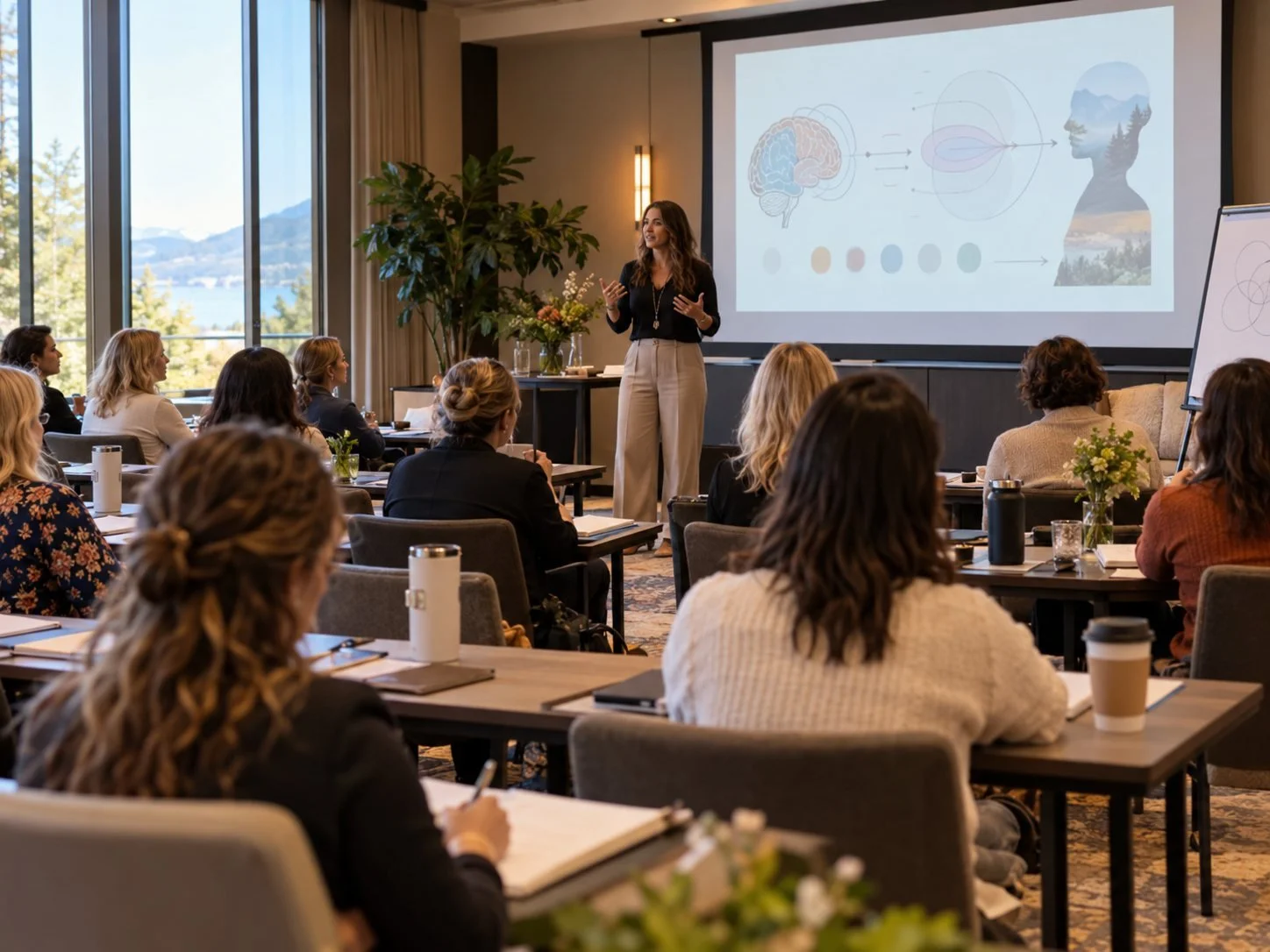
Experiential practice is required. Participants work in pairs and alternate between clinician and client roles, with coaches available to support the learning process.
Practicum may involve real personal material, but participants choose targets suitable for a training environment. You are not required to disclose detailed personal information, and the training is not an appropriate setting for processing unresolved major trauma. Grounding and preparation skills are practised before processing exercises.
Read the provider's complete notice of disclosure before registering so you can make an informed decision about participation.