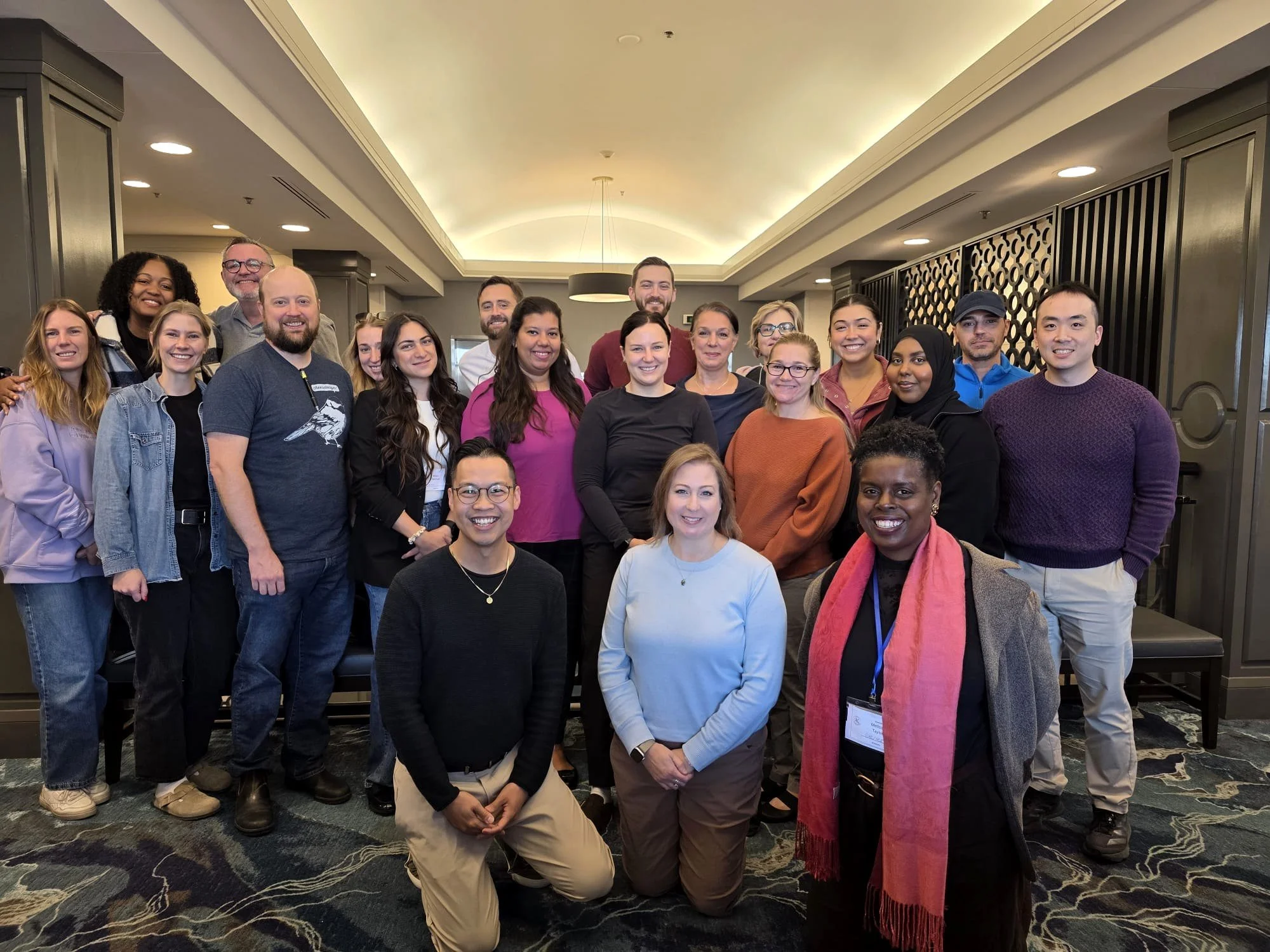
Bring EMDR into your clinical practice.
Explore the November 2026 live virtual EMDR Basic Training with Kyle Poon. Review the five-day schedule, practicum, included consultation and registration details below.
Featured live virtual EMDR training — November 2026
Kyle Poon is leading a live virtual EMDR Basic Training through EMDR Consulting on November 16–18 and November 23–24, 2026. The course is delivered in Alberta time (Edmonton) through a flexible two-week format.
Kyle teaches EMDR Consulting’s curriculum, developed by Roy Kiessling, founder of EMDR Consulting. He was personally trained and mentored by Roy to become an EMDR trainer. Roy completed his EMDR training with EMDR’s developer, Francine Shapiro, and began facilitating her EMDR Institute trainings in 1997.
EMDRIA-approved EMDR Basic Training
20 hours of live instruction
20 hours of live supervised practicum
10 hours of required group consultation included
40 hours of continuing education credit listed by the training provider
Digital manual, worksheets, learning resources, and ongoing access to updated training materials
Schedule: 8:00 am–5:30 pm Alberta time (Edmonton) each day: 6:00–3:30 US Pacific; 7:00–4:30 BC, Yukon and US Mountain; 8:00–5:30 Saskatchewan and US Central; 9:00–6:30 Manitoba, Ontario, Quebec and US Eastern; 10:00–7:30 Atlantic. Day 1 community networking begins at 7:30 am Alberta time.
Fee: $1,595 USD standard; $1,395 USD for non-profit and community mental health clinicians, students and interns, 2 years postgrad, active duty military and veterans. Pay-in-5 plans available.
Regular pricing through November 6, 2026 (+$100 USD after)
Registration closes November 13, 2026
Canadian trainer, fees in US dollars. Kyle Poon is a Canadian Registered Psychologist (R.Psych) and EMDRIA Approved Trainer based in Edmonton, Alberta. The training is offered through Roy Kiessling's EMDR Consulting, a US company that handles registration and payment, so fees are in US dollars.
What is EMDR Basic Training?
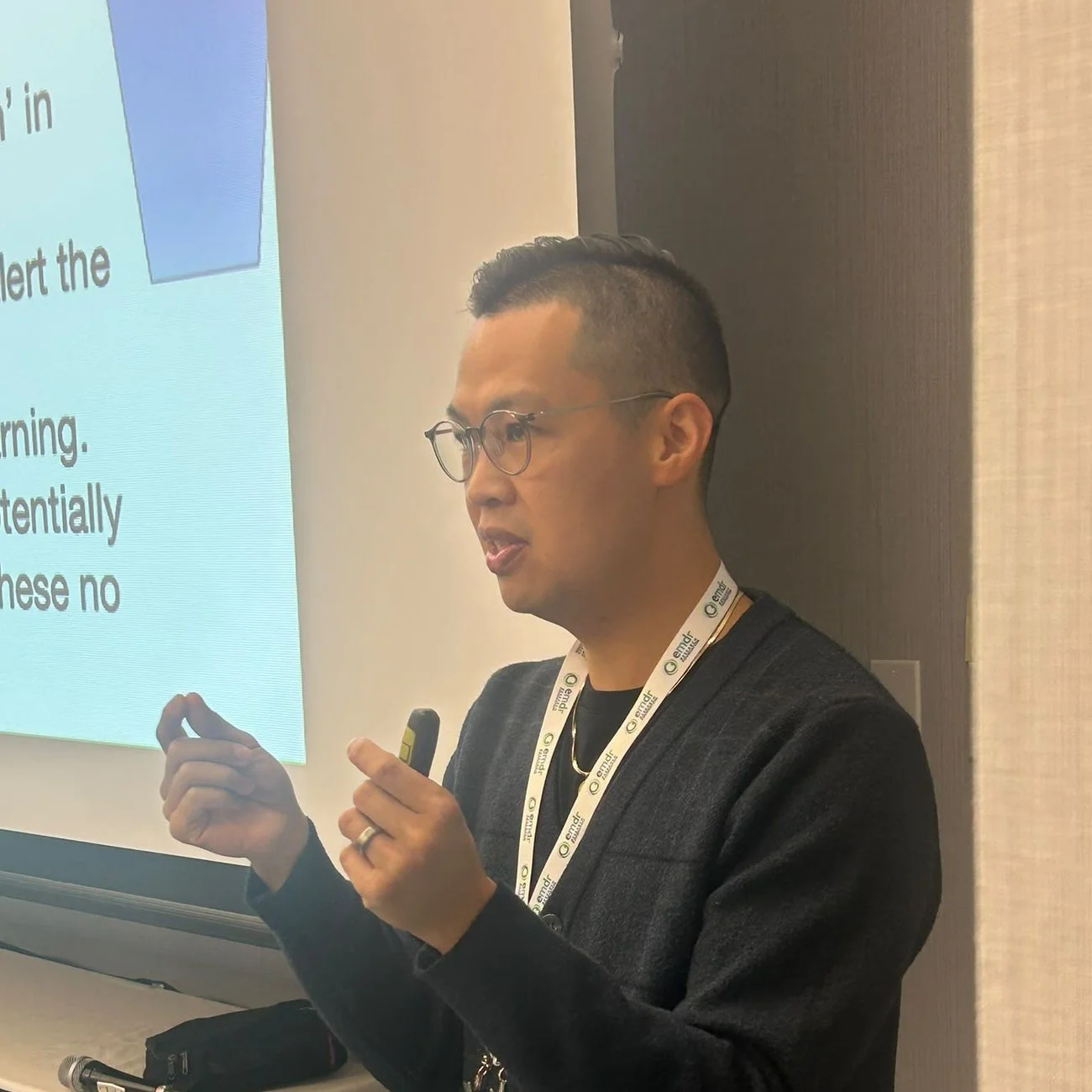
Integrate EMDR into your clinical practice
Eye Movement Desensitization and Reprocessing, or EMDR, is a psychotherapy approach used to help clients process distressing experiences and trauma-related symptoms. EMDR therapy is guided by the Adaptive Information Processing model and organized through an eight-phase approach that includes history taking, preparation, assessment, desensitization, installation, body scan, closure, and reevaluation.
The November 2026 EMDR Consulting program includes all three components. It is a full basic training, not a brief overview or introductory workshop.
What You'll Learn
The training is designed to help clinicians move from understanding EMDR conceptually to applying it with structure and clinical judgment. Learning areas include:
The Adaptive Information Processing model and its relevance to case conceptualization
The history, evidence base, and hypothesized mechanisms of EMDR therapy
All eight phases of EMDR therapy
Client selection, informed consent, and treatment planning
Stabilization, affect management, and preparation for processing
Target sequence planning across past experiences, present triggers, and future situations
Standard EMDR processing and more contained or restricted approaches
Bilateral or dual-attention stimulation options using a client-centred lens
Recognizing when processing is moving, blocked, or becoming too activating
Clinical interventions and cognitive interweaves
Reevaluation and integration across sessions
Delivering EMDR through telehealth
Introductory adaptations for complex presentations and selected populations
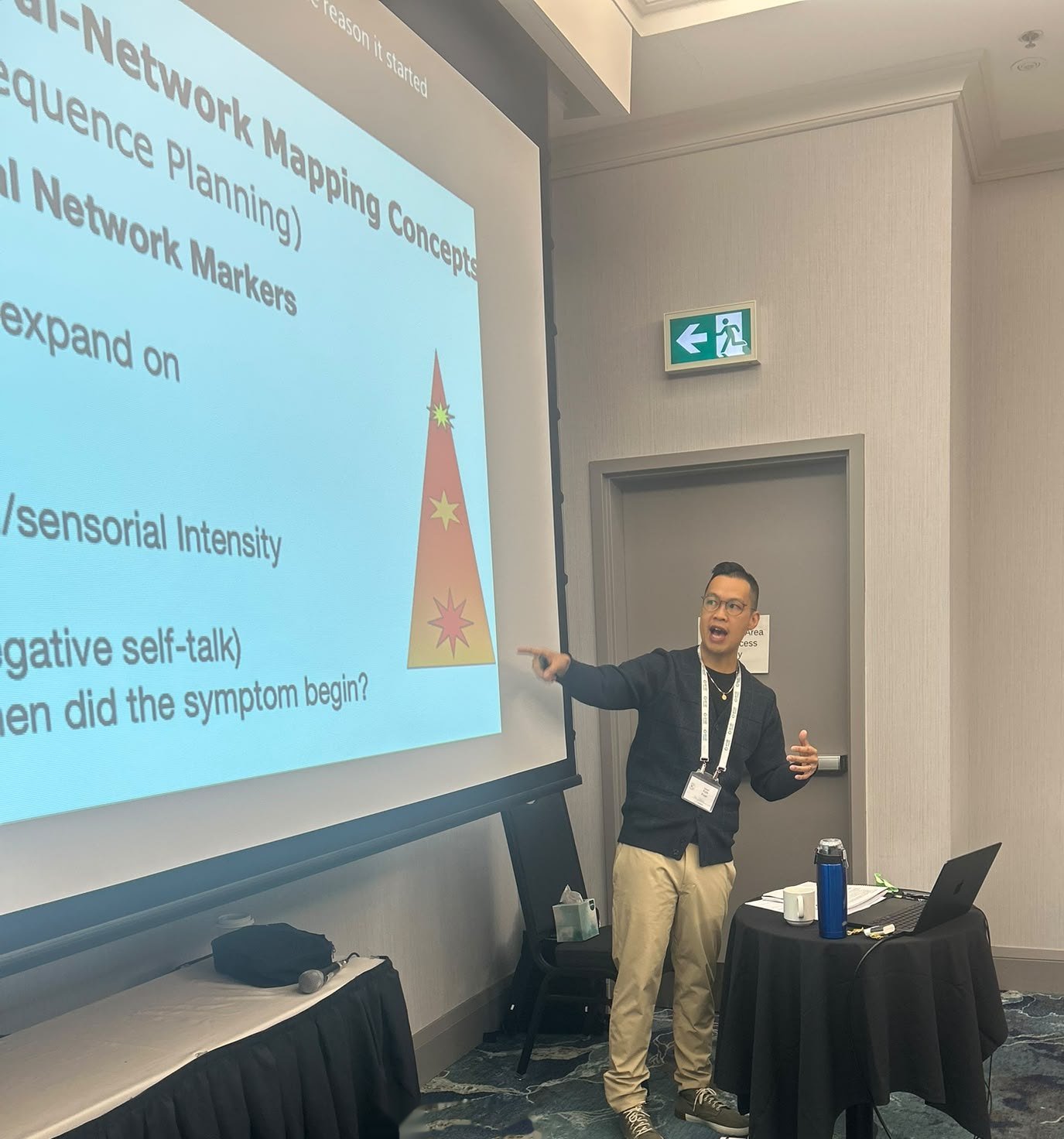
How the learning experience works
Live teaching and demonstration
Core concepts are taught through live instruction, discussion, clinical examples, video or live demonstrations, and opportunities for questions. The aim is not memorizing a script in isolation. It is understanding why each phase is used, how phases connect, and what clinical information should guide the next step.
Supervised experiential practice
Participants alternate between clinician and client roles during live practicum exercises. Coaches provide observation, feedback, and support. Practicum is an essential part of basic training because EMDR involves relational pacing, careful observation, procedural fluency, and clinical decision-making that cannot be learned through reading alone.
Participants select material that is appropriate for a learning environment. The practicum is not therapy and is not the place to process unresolved major trauma.
Consultation after the classroom component
Ten hours of group consultation are included in the registration fee and completed outside the five training days. Consultation supports the transition from classroom learning to actual clinical integration. The entire training process, including consultation and the learner assessment, must be completed within the provider's stated twelve-month period.
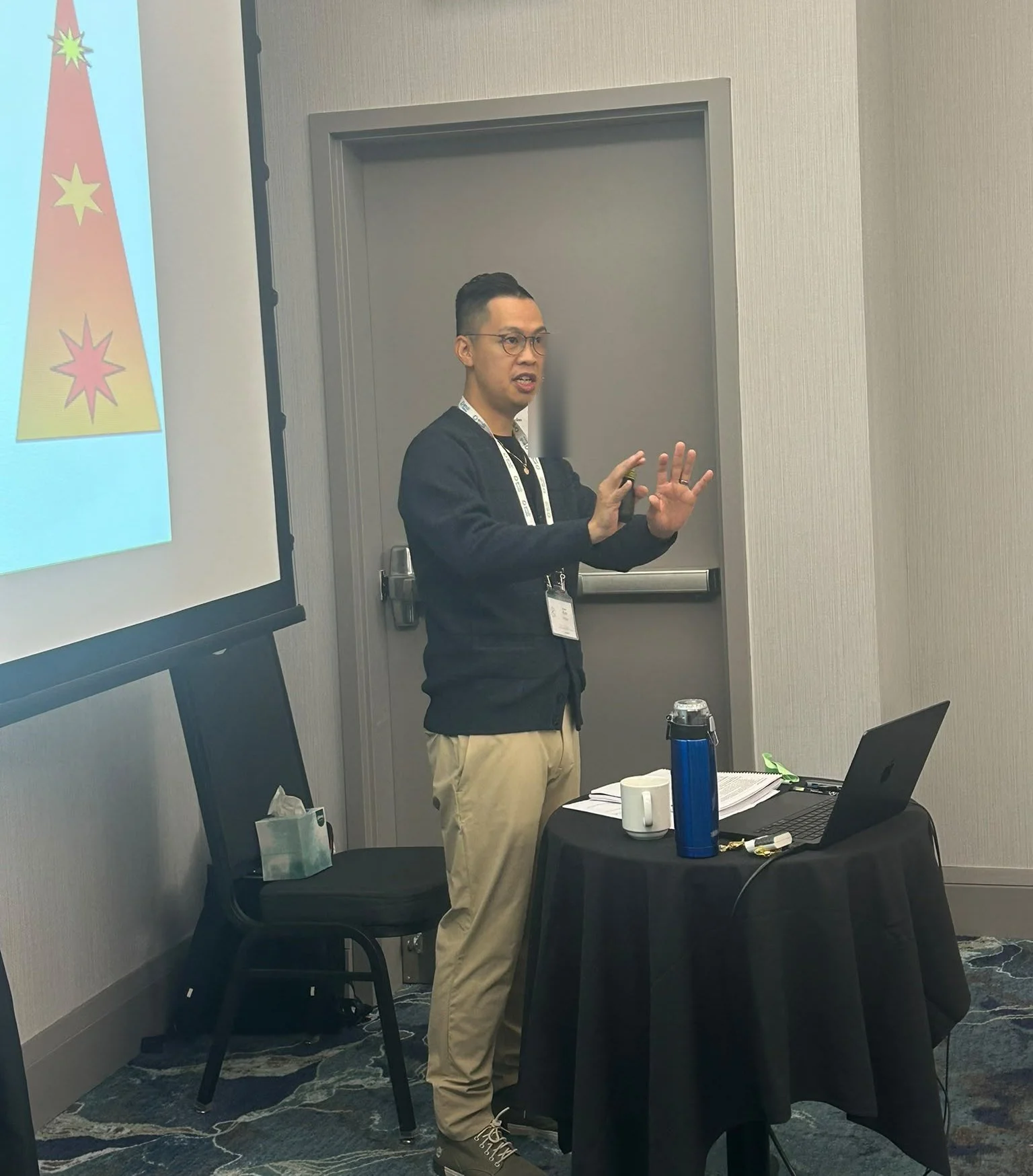
A clinically grounded and culturally responsive teaching lens
Trauma does not occur outside culture, identity, power, relationships, or systems. Kyle's teaching emphasizes fidelity to EMDR while inviting clinicians to consider how culture, racism, marginalization, occupational culture, neurodivergence, safety, access, and lived experience shape assessment and treatment.
Kyle's background includes clinical work with:
BIPOC clients and racial, cultural, and intergenerational trauma
Public safety personnel, first responders, correctional officers, and health-care professionals
Veterans and military members
PTSD, complex PTSD, and dissociative presentations
Survivors of childhood, relational, repeated, and sexual trauma
Therapists and other helping professionals
This lens does not replace the standard EMDR model. It helps clinicians apply the model with greater curiosity, humility, responsiveness, and attention to context.